Preparing Telecom Commerce for the Age of AI Agents

AI shopping agents are moving quickly from concept to consumer product. Tools like Meta’s Muse demonstrate how AI systems can already search across retailers, compare options, prepare purchases, and ask the customer to approve the final transaction before checkout.
Now apply that model to telecom. A customer asks:
“Find me the best plan with enough data for my family, international roaming, and device financing under $100 per month.”
The request sounds simple, but the underlying journey is not. An agent must interpret plan terms, coverage, eligibility, financing, promotions, device compatibility, inventory, and fulfilment before it can confidently recommend an offer. Moving from recommendation to transaction introduces even more complexity.
That raises a new strategic question for telecom operators:
Can your business be understood and trusted by an AI agent?
AI is Reshaping Telecom Discovery
The first agent-mediated telecom journeys are unlikely to be the most complex. Plan and device comparison, bill auditing, and plan right-sizing are emerging first because they primarily require interpreting existing information. Digital products such as travel connectivity and eSIMs may follow closely. More complex postpaid purchases involving identity verification, credit checks, device financing, number porting, fulfilment, and activation will require stronger integration, governance, and customer approval before they become broadly agent-led.
For years, digital visibility was largely about helping customers find the right webpage. AI-powered answer engines are beginning to change that model. Instead of comparing a list of provider websites, customers can increasingly ask for recommendations tailored to their needs, budget, location, and eligibility.
As those recommendations become more influential in purchase decisions, telecom operators face a new challenge.
Success may depend not only on whether an offer can be found, but whether an AI system can accurately understand, compare, and trust it.
This is where answer engine optimization (AEO) becomes part of your commerce strategy. AEO is not simply about making content visible to AI systems. It requires authoritative content, consistent product information, structured data, and validating signals that help answer engines determine which information is current and reliable. For operators, discoverability and authority increasingly depend on the same foundation: a governed version of the truth that can serve customers, employees, partners, and AI systems.
The Real Barrier Isn’t the AI Model
The industry is investing heavily in AI, but operational readiness remains limited. In Verizon’s 2026 Connected Retail Experience Study, 83% of retailers said AI was necessary to compete, yet only 6% rated their capabilities as mature. Siloed data, integration challenges, and limited specialized talent were among the barriers.
Telecom operators face a foundational challenge. Information about products, pricing, promotions, inventory, coverage, eligibility, and transactions often exist across multiple systems and may be represented differently online, in stores, in contact centers, and across dealer channels.
Those inconsistencies already create friction for customers and employees. In an agent-mediated journey, they create uncertainty for the systems attempting to interpret and represent the business. When prices don’t match across channels, promo terms are vague, or inventory is out of date, an AI agent can’t confidently recommend your offer.
Consider a promotion advertised as “save when you add a line.” The actual eligibility may vary by geography, customer type, financing status, channel, and activation date. A human can ask for clarification. An AI agent needs those conditions expressed as explicit, consistent rules before it can determine whether the offer applies.
The primary barrier for telecom operators may not be the AI model itself. It may be the commerce foundation the model depends on.
What Makes a Telco Agent-Ready?
Agent readiness is not a single AI feature or deployment. It is the ability to expose telecom commerce information, rules, and capabilities to approved AI systems in a way that is discoverable, trustworthy, actionable, and governed.
Returning to the family-plan request, an agent must navigate a chain of telecom-specific decisions before it can confidently recommend or act on an offer. It must determine eligibility, account for financing and credit requirements, confirm device and network compatibility, assess number porting options, and understand how activation and fulfilment should occur. If a dealer is involved, the operator may also need to preserve dealer identification and attribution.
Five connected characteristics determine whether an operator is truly agent-ready. Together, they answer five distinct questions: Can the AI agent find the information, trust it, interpret it, act on it, and do so within approved boundaries?
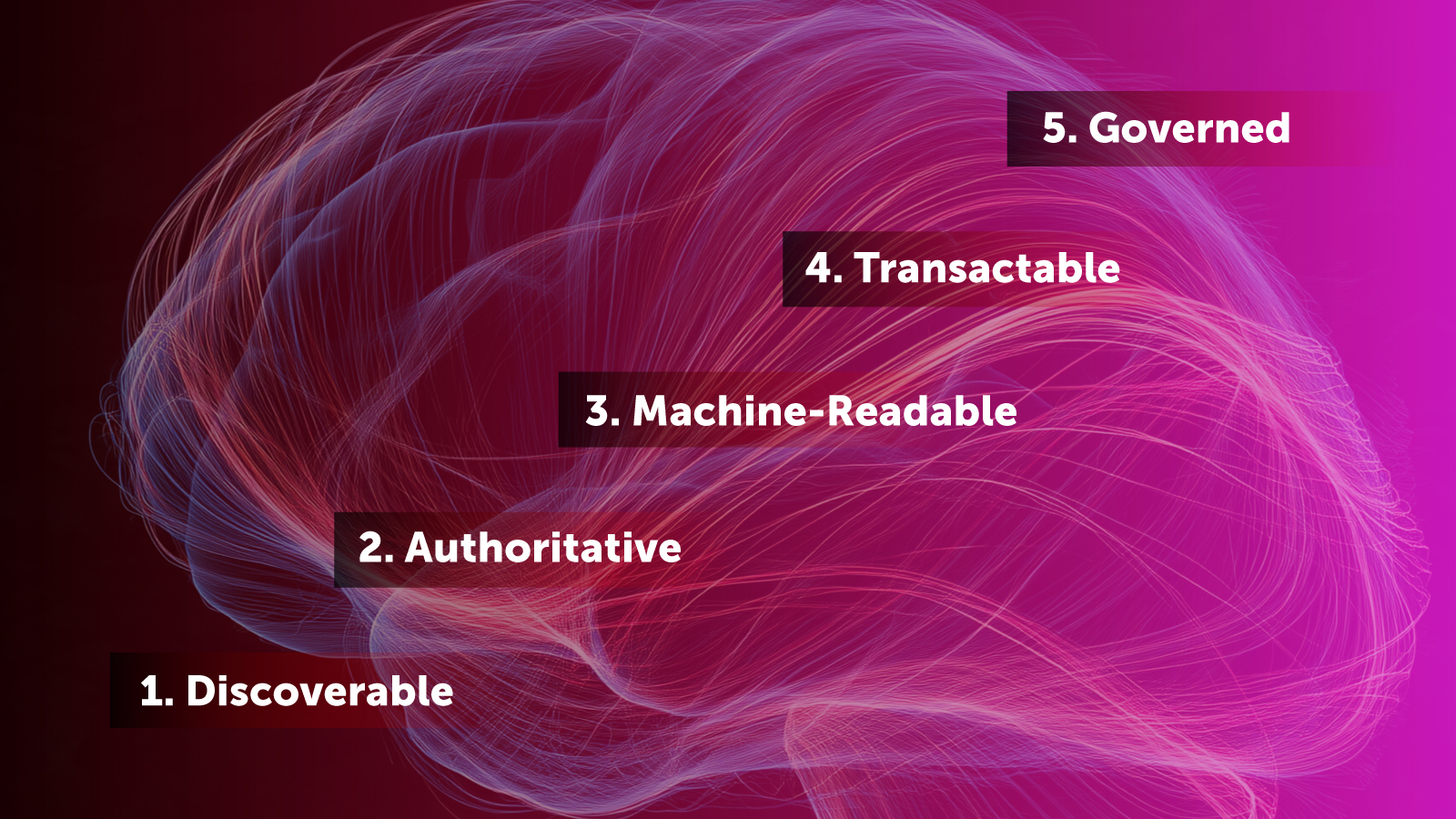
1. Discoverable: An agent must be able to locate accurate information about plans, devices, promotions, coverage, financing, inventory, policies, and eligibility. Discoverability extends beyond whether content appears on a website. Critical commerce information must be consistently accessible across the channels, systems, and interfaces AI systems rely on.
The family-plan scenario: Can the agent find which plans include international roaming, which devices qualify for financing, whether they are available locally, and which offers apply to this customer? |
2. Authoritative: The agent must be able to trust the information it finds is complete, current, and reliable. Because telecom offers vary by geography, channel, customer status, device, and promotional period, operators need clear sources of truth and governance over how updates reach human-facing and machine-facing channels.
The family-plan scenario: If one source shows a device as financeable, another lists different promotional terms, and a dealer system reports different inventory, which answer should the agent trust? |
3. Machine-Readable: Information designed for people is not automatically easy for software to interpret. Agents need structured product models, stable identifiers, machine-readable catalogues, explicit business rules, and approved interfaces so they do not have to infer critical offer details by scraping webpages.
As the ecosystem evolves, those interfaces may include governed APIs, MCP-style connectors, and emerging commerce protocols that support activities such as product discovery, checkout, and post-purchase services.
The family-plan scenario: Can the agent interpret credit tiers, financing limits, line eligibility, port-in requirements, device compatibility, roaming inclusions, and activation prerequisites as structured rules rather than marketing copy? |
4. Transactable: True agent readiness goes beyond answering questions. With appropriate controls, agents may be asked to confirm eligibility, reserve inventory, initiate upgrades, prepare orders, schedule appointments, provision services, or complete transactions. This requires governed access to reusable commerce services, not unrestricted system access.
The family-plan scenario: Can the agent move from recommendation to identity verification, financing approval, number-porting authorization, device fulfilment, eSIM provisioning, and activation while preserving dealer attribution? |
5. Governed: As agents assume more responsibility, operators must govern identity, authorization, privacy, consent, and accountability. They need clear boundaries around what an agent can discover, recommend, prepare, and execute, as well as when customer confirmation or additional verification is required. Published agent policies can help define which actions, information, and interfaces are approved.
The family-plan scenario: The agent may compare plans or prepare an order, but should it be able to authorize a credit check, transfer a number, accept financing terms, or activate service without explicit customer consent? |
What Makes a Telco Agent-Ready?
Agent readiness is not a separate transformation program. It is the next stage of commerce orchestration.
The architecture that allows a customer to begin online and complete a purchase in-store can also enable an AI agent to research, configure, and initiate the same purchase journey. Both journeys depend on consistent information, connected inventory, reusable commerce services, governed workflows, and context that can move across systems.
The same foundation that supports connected customer journeys also enables AI systems to discover, interpret, and act on commerce information consistently.
Individual AI applications can improve isolated tasks, but they do not resolve fragmentation across catalogues, channels, inventory, offers, customer records, and transactions. An orchestrated foundation allows the same capabilities to be used wherever the interaction occurs, whether the participant is a customer, employee, partner, or AI agent. The AI-Connected Telco Whitepaper explores this idea further, positioning agent-ready architecture as an extension of commerce orchestration rather than a separate technology layer.
The Future Is Not More AI. It’s Better Foundations.
As AI agents become researchers, advisors, and transaction participants, competitive advantage will increasingly depend on how effectively organizations expose trusted information, reusable services, and governed workflows.
The best-positioned telecom operators may not be those running the most AI pilots. They will be those with authoritative commerce information, reusable services, governed interfaces, and clear boundaries around the actions an agent may take.
Agent readiness is not separate from customer experience transformation. It is the next test of whether a telecom operator’s commerce foundations can support customers, employees, partners, and AI systems alike.
Returning to the opening request, the challenge is not simply whether an AI agent can find a family plan. It is whether the agent can understand the offer, verify eligibility, prepare the transaction, preserve dealer attribution, and move the journey forward without compromising trust, consent, or governance.
The question is no longer whether your channels are ready for AI. It is whether your business is one that AI can understand and trust.
How ready is your organization for AI-connected commerce?
Assess your ability to connect customer context, intelligence, and action across the telecom journey, and identify the capabilities required to move from fragmented systems toward orchestrated commerce.
AI Agent Frequently Asked Questions
-
What is an AI agent in telecom commerce?
An AI agent can research plans, compare offers, evaluate eligibility requirements, and help customers complete telecom purchase journeys.
-
What makes a telecom operator agent-ready?
Agent-ready operators provide discoverable, authoritative, machine-readable, transactable, and governed commerce capabilities.
-
Why is orchestration important for AI agents?
AI agents depend on the same connected data, workflows, and commerce services that support modern omnichannel customer journeys.
-
What is answer engine optimization (AEO)?
Answer engine optimization helps AI-powered search and recommendation systems understand, trust, and accurately present information to users.
-
How will AI agents affect telecom customer journeys?
AI agents may increasingly assist with plan comparisons, device selection, eligibility evaluation, upgrades, service provisioning, and other telecom commerce activities.


